What happens after you flush the toilet is probably not something you think about very often. But what goes down the drain can have a major impact on your home’s plumbing and Hilton Head PSD’s public sewer system.
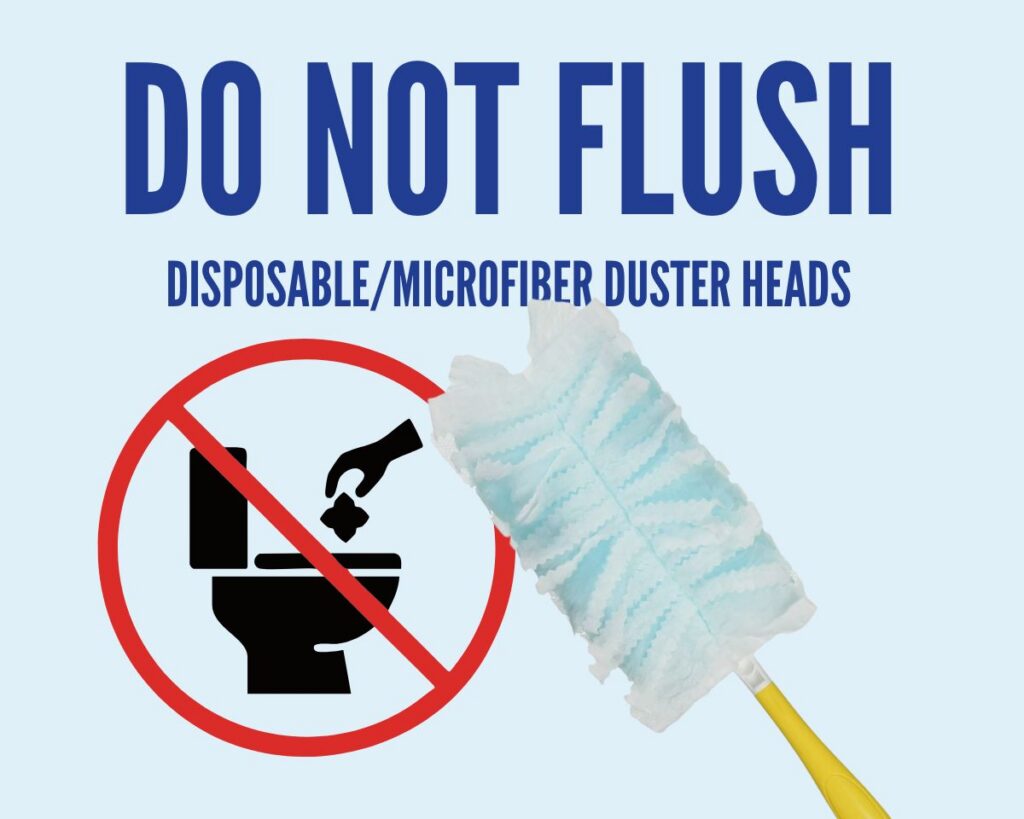
Hilton Head PSD is currently seeing a troubling increase in disposable and microfiber duster heads, including products similar to Swiffer duster heads, being flushed into the sewer system.
These products belong in the trash, not the toilet.
Unlike toilet paper, microfiber cleaning products are designed to stay strong when wet. They do not quickly break apart as they travel through sewer pipes. Instead, they can become tangled around pumps and other wastewater equipment, contribute to blockages and require costly maintenance to remove.
The good news is that preventing these problems is remarkably simple.
A Special Warning About Disposable Duster Heads
Cleaning products can look harmless once they are wet, but being wet does not make a product flushable.
Disposable, throw-away and microfiber duster heads should NEVER be flushed down the toilet or put down a drain.
After using a disposable duster head, place it directly in your household trash.
When these products enter the sewer system, they can:
- Wrap around pumps and mechanical equipment
- Become caught on other debris
- Contribute to clogged sewer pipes
- Cause sewer backups and service disruptions
- Damage wastewater equipment
- Require additional maintenance and repairs
That means something as small as tossing a used duster head into the toilet can become a much bigger problem farther down the sewer line.
Remember the 3 Ps: Pee, Poop and Toilet Paper
There are only three things that should routinely be flushed down your toilet:
- Pee
- Poop
- Toilet paper
Everything else should go somewhere else.
The U.S. Environmental Protection Agency advises people to flush only human waste and toilet paper. The wastewater industry has similarly promoted the easy-to-remember “3 Ps” rule to help prevent sewer blockages and equipment problems.
What Else Should Never Be Flushed?
Duster heads are not the only products that cause trouble. Your toilet is designed to handle toilet paper and human waste, not household trash.
Keep these items out of the toilet:
“Flushable” wipes and cleaning wipes. Wipes generally do not behave like toilet paper in a sewer system. The EPA specifically warns that some household products marketed as flushable can contribute to sewer problems.
Baby wipes. These are particularly durable and should always go in the trash.
Paper towels and facial tissues. They may look similar to toilet paper, but they are manufactured to remain stronger when wet.
Cotton swabs and cotton products. These products do not readily break down and can become caught in pipes and equipment.
Dental floss. Floss can wrap around other materials and mechanical components.
Feminine hygiene products. Tampons, pads and similar products should always be disposed of in the trash.
Diapers. Even small or partially torn diapers can cause serious blockages.
Cat litter. Cat litter belongs in the trash, never the toilet.
Fats, oils and grease. These materials can cool and accumulate inside sewer pipes, contributing to blockages.
Medications, household chemicals, paints, solvents, pesticides, automotive fluids and other hazardous materials also should never be disposed of by flushing them down the toilet.
But the Package Says “Flushable.” Can I Flush It?
A product disappearing from the toilet bowl does not necessarily mean it is safe for the sewer system.
Toilet paper is specifically designed to lose strength and break apart quickly in water. Many wipes and other disposable products remain substantially more intact after they are flushed.
Once they leave your house, those materials must travel through pipes, pumps and other infrastructure before wastewater can be treated.
The safest rule is simple:
If it isn’t one of the 3 Ps, don’t flush it.
What Happens When Non-Flushable Materials Enter the Sewer System?
Improperly flushed items don’t simply disappear.
Sewer Backups
Materials can accumulate in pipes and contribute to blockages. In some circumstances, sewer blockages can cause wastewater to back up into homes or businesses.
Equipment Problems
Fibrous materials such as wipes, cleaning products, floss and microfiber duster heads can become tangled around wastewater pumps and other equipment.
Increased Maintenance
Clogs and damaged equipment require staff time and resources to remove, repair and maintain. Preventing these materials from entering the system in the first place is considerably better than removing them afterward.
Potential Environmental Impacts
Sewer blockages are also more than a maintenance issue. The EPA notes that inappropriate materials in sewer systems can contribute to sanitary sewer overflows, which release untreated or partially treated sewage into the environment.
A Small Habit Makes a Big Difference
Hilton Head PSD works every day to provide reliable wastewater collection and treatment for our community. Residents and businesses can help protect that system with one very easy habit:
When in doubt, throw it out.
Keep a small trash can in your bathroom for wipes, tissues, hygiene products and other disposable items. And after cleaning your home, remember that disposable and microfiber duster heads go directly into the trash.
Help Us Keep Hilton Head Island’s Sewer System Flowing
Please share this information with your family members, guests, renters, employees and neighbors.
And remember:
Pee. Poop. Toilet paper.
Those are the only three Ps your toilet needs.
Disposable and microfiber duster heads belong in the trash, not the toilet.