

Hilton Head Public Service District (PSD) is encouraging customers to reduce outdoor irrigation and allow cooler temperatures and seasonal rainfall to do more of the work for their landscapes, as late fall and winter approach.
Most South Carolina landscapes require significantly less supplemental irrigation during the cooler months because plant growth slows, temperatures are lower, and rainfall often provides adequate moisture, according to the Clemson Cooperative Extension Service. In many cases, regularly scheduled irrigation during the fall and winter can be unnecessary and wasteful.
Customers are also reminded that the Town of Hilton Head Island’s irrigation ordinance limits landscape irrigation to no more than two days per week at all times.
Under the ordinance:
- All irrigation systems must have a working rain sensor.
- Residential properties with even-numbered addresses may irrigate only on Tuesdays and Saturdays.
- Residential properties with odd-numbered addresses may irrigate only on Wednesdays and Sundays.
- Commercial properties, hotels, offices, condominiums, and POA common areas may irrigate only on Mondays and Thursday
Many warm-season grasses common in the Lowcountry, including centipede, bermudagrass, St. Augustine, and zoysia, enter a period of dormancy during the winter and require far less water than they do during the growing season. Clemson Extension notes that most lawns receive sufficient moisture from rainfall throughout the winter months.
“Reducing irrigation during the cooler months is one of the easiest ways residents can use water efficiently while still maintaining a healthy landscape,” said a Hilton Head PSD General Manager Pete Nardi. “Small adjustments to irrigation timers can have a meaningful impact on overall water consumption.”
Clemson Extension recommends that homeowners:
- Reduce irrigation frequency and run times as temperatures cool.
- Monitor rainfall before watering rather than relying solely on automatic schedules.
- Consider turning irrigation systems off during extended periods of adequate rainfall.
- Water only when lawns or plants show signs of drought stress.
- During unusually dry winter periods, apply supplemental water only as needed.
- Clemson Extension advises that warm-season lawns may benefit from approximately one inch of water if no measurable rainfall has occurred for three weeks or longer.
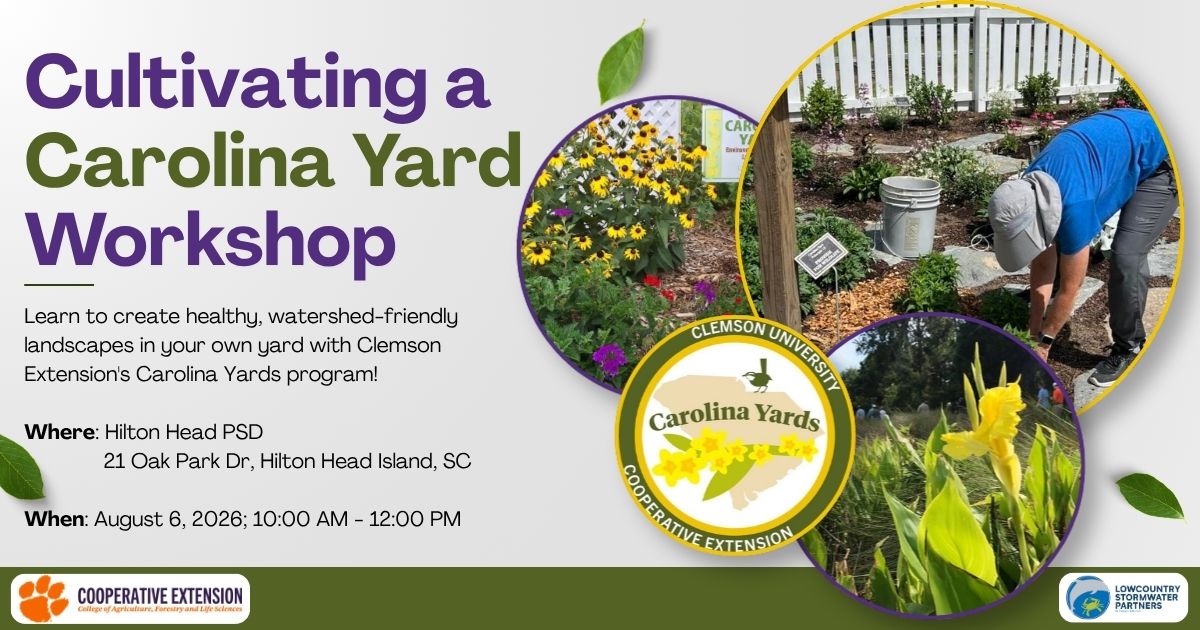
Hilton Head PSD also encourages residents to explore Clemson Extension’s Carolina Yards program, which provides practical guidance on creating attractive, environmentally friendly landscapes that conserve water, reduce runoff, and protect local waterways. The program is specifically designed to help South Carolinians make sustainable landscaping choices. Learn more about Carolina Yards at: https://www.clemson.edu/extension/carolinayards/
For additional water conservation tips and information about efficient irrigation practices, visit https://hhpsd.com/about-our-water/water-conservation/